
OUR
TECHNO
LOGY
Produkujemy:
-membrany sportowych hal pneumatycznych w technologii 2 i 3 powłokowej
-membrany hal namiotowych
High Frequency Welding
The quickest, the most efficient machine on the market. With its advantages production process timeline is reduced significantly and the weld seam that is recieved is at least as strong or even stronger as the surrounding material.
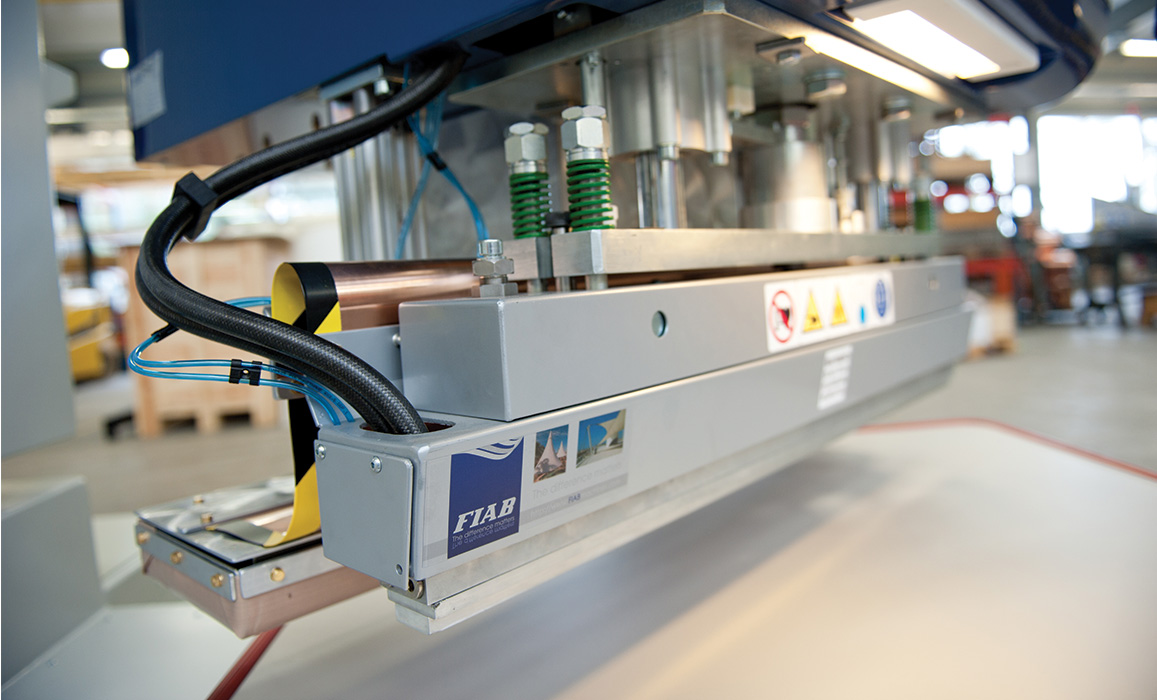
OUR WELDING TECHNOLOGY
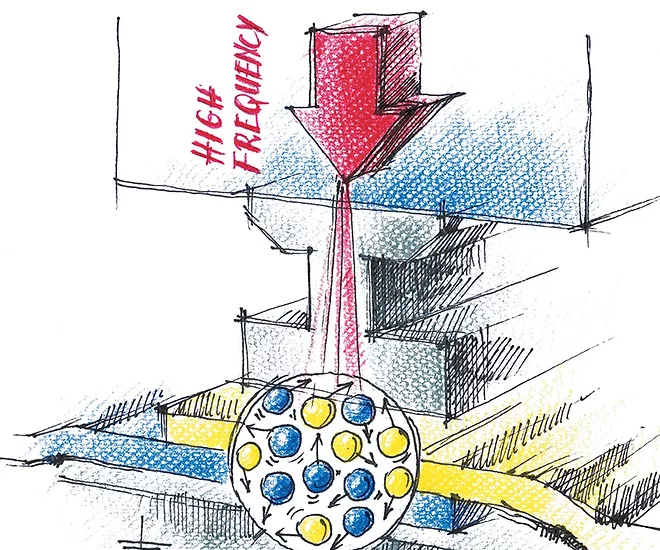
High frequency welding method uses a high frequency - usually 27,12 MHz – electromagnetic energy to excite the polar molecules of the dielectric materials placed between two welding electrodes, usually made of brass or aluminum. The electrodes are usually mounted in a pneumatic or hydraulic press to provide pressure for fusing the material, whereupon a high frequency voltage is connected to the plates. Every time the electric field changes, the dipole molecules of the polymer attempt to flip around to realign themselves to the new field orientation (orientation of dipoles is changing in the material twenty seven million times a second when follows reversing, HF electric field). As a result of the vibrating molecules is heating up to the melting (fusing) temperature. By bringing two layers of material into the HF field at the same time and pressing them together, the layers melt together (fuse) and form a strong welded joint.
The great advantage of HF welding is the speed of welding: the material is heated from the inside and fuses quickly, within few seconds. In comparison with high frequency, in all other kinds of welding methods (with filaments, hot air or infrared radiation) the heat has to be added from the outside. It means the heat must first penetrate the material in order to make it plastic enough to form a weld. The main risk of this kind of treatment is burning the top layer of welded material. In a high frequency field some materials generate more heat than others, and are therefore more suitable for HF welding. This has to do with the extent to which the molecules of the material allow themselves to vibrate as a result of the HF field. This is known as the loss factor of the material. The greater the loss factor of the material, the easier it is to weld the material using high frequency equipment. Particularly easy to weld are thermoplastics, such as PVC and PU; these materials are specifically welded using high-frequency welding machines. PE and other hard plastics are much more difficult to weld with HF method.
The material is placed between the upper and lower electrodes (under pressure)
Upper electrode is connected to HF supply (moves up and down during welding)
Lower electrode is connected to electrical earth
Electrodes are separated by a buffer material (mylar, teflon, pressed board, silicone fiberglass, bakelite, glassine, melinex, etc.)
HF generator converts energy from supply network to high frequency (usually 27,12 MHz)
Consists of high frequency amplifier with feedback circuit
Rapidly alternating electric field (it is changing 27 mln times a second)
Dipole polarization process (orientation of dipols is changing 27 mln times a sec to follow reversing electric field)
Internal molecular friction heating
Materials melt and fuse to produce a strong weld
WRITE TO US
CONTACT US VIA THE FORM BELOW.
OR CALL
(232) 724-2356
OFFICE LOCATION
Milowicka 1 F
40-312 Katowice
OPENING HOURS
From Monday to Friday from 8:00 to 17:00
info@texicon.eu